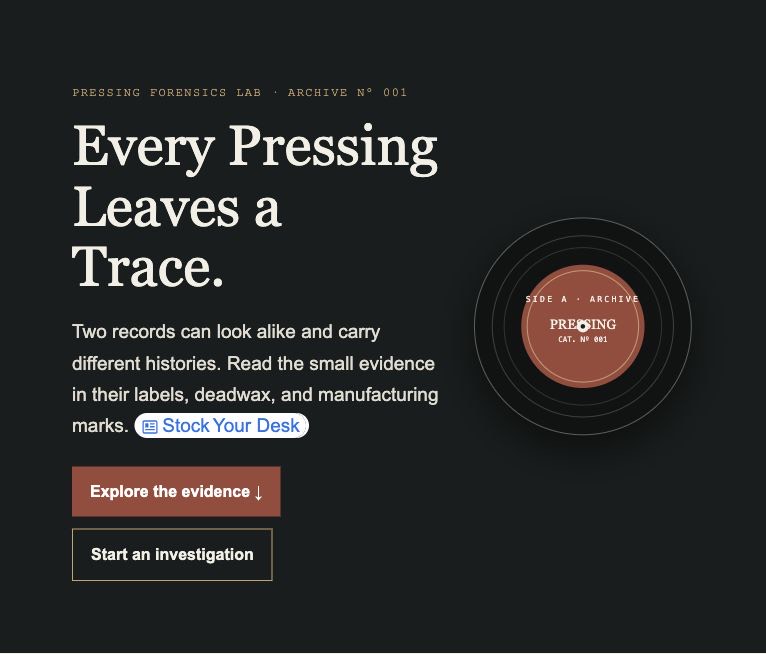
A bilingual vinyl pressing field guide for label comparison, runout transcription and evidence records. Tested section links and mobile layout; the inspected overview has no operative photo analyzer or specimen-saving interface.
- Brand
- Vinyl Label Archive
- Tool languages
- en, ko
- Verified date
- 2026-11-14
Vinyl pressing research becomes easier when you separate what a record shows from what you think it means. Vinyl Label Archive — Pressing Forensics Lab is a bilingual introduction to reading labels, runouts and manufacturing clues. Its current page explains a method; it does not offer a working photo analyzer or a collection database.
Reviewed on 14 November 2026 (KST). We checked the English page and Korean mobile layout, followed the section controls and inspected the visible input options. No physical records were supplied or identified in this review.
On this page
Key takeaways
Use the archive as a checklist before describing a possible pressing variant. The useful habit is to preserve a literal observation, attach its source and delay a conclusion until several clues agree. That is valuable even when a candidate record looks almost identical to another listing.
What to expect: English and Korean explanations; links to comparison, runout, archive and investigation sections; static diagrams; and a four-stage inspection outline. What not to expect from the inspected page: photo import, automatic difference highlighting, an editable runout clock, saved specimen cards or a downloadable comparison report.
Keep your own photographs and notes separately. Treat an unreadable character as unresolved rather than filling it from a promising listing. A changed digit is something to record, not sufficient proof of a different plant, date or first pressing.
What Vinyl Label Archive does
The official name is Vinyl Label Archive, with the subtitle Pressing Forensics Lab. Its opening message is “Every Pressing Leaves a Trace.” The central idea is to examine evidence across the label, deadwax and packaging instead of deciding from a sleeve image alone. The English and Korean versions present the same broad investigation approach.
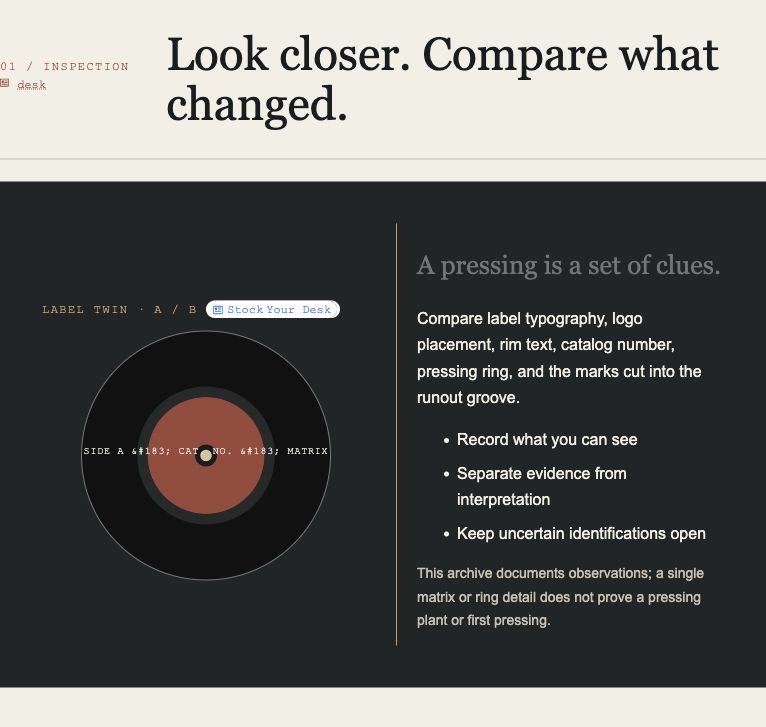
The comparison section asks readers to notice typography, logo placement, rim text, catalog numbers and the pressing ring. The runout section discusses inscriptions, symbols and distinctions between hand-etched and machine-stamped marks. The archive section describes mystery cases, inspection notes and a K-Pressing Archive for Korean licensed records.
These are descriptive sections on the current overview. We did not find a searchable case collection or individual case-entry workflow behind those cards. The heading “Label Twin Detector” describes placing photographs side by side; it should not be read as confirmation that this page accepts two images and computes their differences.
There is no record-specific result generated by entering data. The immediate output is an educational reading sequence. A useful research record is something the reader creates elsewhere after applying the prompts. This distinction matters before spending time searching the page for an upload button that the inspected article does not contain.
The problem: similar labels, different evidence
A seller’s photograph may show a familiar label while omitting the runout. A database listing may show a plausible catalog number but include several manufacturing variations. Your own disc may also arrive inside a sleeve whose history is unknown. These are different evidence gaps, and one attractive match does not close all of them.
The guide helps organize an inspection into smaller questions. Does the printed label match? What is actually inscribed on side A? Is side B consistent with the proposed match? Which photograph supports the sleeve claim? A notebook that preserves these questions is easier to revisit than a single confident identification with no source trail.
It is especially useful before asking another collector for help. Instead of “Which edition is this?”, you can provide both label photographs, separate side inscriptions and a short statement of what remains uncertain. The page supplies a structure for that request, rather than an authentication service or an answer from a verified pressing catalog.
What we actually tested
| Check performed | Observed result | Practical meaning |
|---|---|---|
| English navigation | Compare → #compare; Runout → #runout; Archive → #archive | The main controls move to sections in the same guide. |
| Investigation control | Start an investigation → #method | It opens the method outline, not a data-entry project. |
| Korean mobile controls | 런아웃, 조사 순서 보기 and 아카이브 reached their sections | The localized reading route worked at 390 × 844. |
| Mobile width | Document and viewport were both 390px | No horizontal page overflow was found in that source check. |
| Visible article inputs | No input, textarea or select fields in either article | No operative photo or specimen-entry interface was available. |
| Advertising | A Google vignette intercepted the first English navigation; closing it allowed the guide to continue | An advertising interruption is possible; it is not an investigation step. |
We also read the feature descriptions and inspected the three screenshots used here. The English comparison image is a static diagram. We did not upload a label photograph, compare real copies, measure a ring, identify a factory or time an investigation. The source’s four-minute investigation wording is a heading, not a speed result from our test.
Prepare a useful inspection session
Prepare the record, a stable place to photograph it, a camera you already use and somewhere to keep notes. The website itself does not need a record image to display its text. Your preparation is for your own investigation, not an upload session within Vinyl Label Archive.
Create a folder for one physical copy. Give its images unambiguous names such as copy01-sideA-label and copy01-sideB-runout. Keep the untouched originals. Make an additional presentation copy if you later crop, rotate, add arrows or redact an unrelated background. A compact reference image is convenient, but it should not replace the evidence photograph.
Before comparing candidates, decide what question you are answering. A broad release match, a possible manufacturing variant and a description of your particular copy require different levels of detail. If the immediate aim is simply to document an inherited record, accurate observations may already meet that aim without a final pressing attribution.
Vinyl pressing: 7 practical checks
1. Separate the physical copy from the candidate listing
Start a note for the object in front of you. Record the inspection date and give the copy an internal name. Put a proposed database match in a separate candidate field. This prevents a candidate description from silently becoming an observed fact when you copy notes between windows.
Photograph the disc and sleeve as found. If an insert is present, describe its presence; do not assume it originally belonged with that particular disc. A later owner could have changed packaging. You do not need to solve that history before recording what you can see now.
2. Capture each side before comparing small details
Take a complete label view for side A and side B, then closer views where the inscriptions are legible. A single photograph may not illuminate every etched mark equally. Keep the side identifier attached to every close-up so that an isolated image cannot be mistaken for the opposite face.
Use even lighting for the printed label and adjust the viewing angle when a runout mark is difficult to see. Preserve unclear areas as unclear. This is a suggested photographic workflow, not a tested camera preset or a claim that the website corrects glare, perspective or blur.
3. Transcribe the printed label separately
Copy the catalog number and other printed identifiers exactly as visible. Keep label text apart from characters cut into the disc. A label number and a runout string may resemble one another, yet their locations carry different information. Mixing them into one unnamed field removes that distinction.
The Discogs identifier guidelines distinguish printed label matrices from runout matrices and request runout transcription by media side. That provides a useful external reference for preserving location and literal text. Our worksheet below is an independent note format, not a Discogs submission form.
4. Read the runout without completing it from memory
Work through one side at a time. Record the visible characters, spaces, marks and whether a portion looks etched or stamped. If a character could be either a letter or a number, retain the uncertainty beside the transcription. Do not borrow the missing character from the candidate you most want to match.
You can add a clock-position note, but first declare an orientation. For example, state that the label title is upright and the top of that view is twelve o’clock. Rotating a photograph changes the apparent clock location. This is a repeatability convention for your notes, not a universal plant code or a coordinate editor supplied by the page.
5. Compare label geometry with consistent framing
Align the center hole and outer label circle in your own image viewer before judging spacing or logo placement. Compare one feature at a time: type shape, line breaks, rim wording, logo position and ring appearance. A different crop or tilted camera can create a misleading visual difference.
Treat a photograph as evidence of appearance, not a calibrated measuring instrument. Without an established scale and suitable capture, pixels do not establish a ring diameter in millimeters. Vinyl Label Archive does not provide a calibration control or an image-based measurement result in the inspected interface.
6. Evaluate candidate explanations together
Compare the A and B observations against the same candidate. Keep contradictions visible. A matching label with a conflicting side B inscription is an open question, not a reason to ignore that side. Record the candidate URL and what part of it supports each proposed connection.
The Discogs guide to unique versions explains that minor matrix variations do not automatically justify a unique version, while supported manufacturing differences may matter. Use the distinction as a reminder to evaluate evidence, not as a shortcut for declaring every changed digit identical or every plant claim proven.
7. Save observations, confidence and the next question
Finish with three short fields: observed facts, current interpretation and missing evidence. Use confidence terms consistently, such as unverified candidate, probable match or supported match. Explain what would change that status. A label photograph, an additional side inscription or a better source may be the next useful action.
Save this record in your own notes or collection system. The source page’s “Build a pressing record” card is instructional; we found no save button for a private specimen record. Revisit the note when evidence changes, and preserve the earlier interpretation with its date instead of silently rewriting the history.
A clearly fictional comparison example
Teaching example only: imagine two photographed discs whose labels appear alike. One side A inscription reads DEMO-001-A 1; the other reads DEMO-001-A 2. These invented strings are not readings from real records, a catalog lookup or a result produced by the website.
The supported statement is narrow: the transcribed side A strings differ at the last character. You still need side B, a clear photograph of the marks and supporting information about the candidate releases. The difference alone does not establish which copy is earlier, which plant made it or whether it needs a separate database release.
Write “two observed side A endings; relationship unresolved” until further evidence is available. If the second photograph is blurry, even that comparison remains provisional. The practical gain is a transparent question that another reader can check, instead of an impressive-sounding identification that cannot be reconstructed.
Build an evidence worksheet
| Field | What to keep | Mistake it prevents |
|---|---|---|
| Physical copy | A unique local copy name and inspection date | Confusing your disc with a database example |
| Side and view | A/B; label, runout, sleeve or insert; original image filename | Moving an inscription onto the wrong side |
| Literal observation | Visible text and a separate uncertainty note | Filling gaps from a candidate listing |
| Appearance and position | Etched/stamped appearance; declared orientation if using clock positions | Treating rotated photos as a manufacturing difference |
| Candidate source | Direct URL, access date and the specific supporting detail | A claim with no recoverable source |
| Interpretation | Proposed relationship, confidence and contradictions | Turning a hypothesis into a fact |
| Next evidence | The missing view or independent source needed | Repeating the same inconclusive comparison |
Use one row per observation when several images support a field. You can then replace a poor photograph without losing the original transcription or confusing which image justified a change. A simple spreadsheet or text note is sufficient; the value comes from preserving relationships between the evidence and the claim.
Advanced comparison habits
Compare negatives as carefully as matches. A candidate may agree in five obvious places but disagree in one meaningful inscription. Keep that conflict in the note. Counting matching features is less useful than understanding whether the unresolved difference could change the proposed identification.
Do not let the sleeve decide the disc. Record sleeve printing, inserts and distribution wording as separate observations. For Korean licensed records, the source highlights a K-Pressing Archive approach. Preserve Korean label and distributor wording literally before comparing it with a proposed source edition; do not infer a relationship just from a translated album title.
Keep edited images traceable. Name a cropped or annotated image as a derivative, and retain the original alongside it. An arrow can make a mark easier to discuss, but a heavy outline may hide the very stroke being questioned. Provide the unmarked close-up when asking someone to read a difficult inscription.
Stop at a useful uncertainty. If the available images cannot distinguish two candidates, list both and state which missing observation would separate them. That is a defensible research result. A confident guess is harder to correct after it has been copied into a collection record or repeated in a sales description.
Limitations, privacy and mobile use
The largest limitation is operational: this is an overview, not an automated pressing identifier. No photo processing, saved collection entry, export, physical measurement or authenticated case result was available in the inspected article. The headings describe a research direction rather than verified working modules.
The diagrams are illustrative. They do not demonstrate the accuracy of a detector, the readability of a real runout photograph or the reliability of a first-press claim. Some separator characters in the English comparison diagram appeared as code during our visit. The surrounding text remained readable, but that rendering flaw should not be mistaken for inscription data.
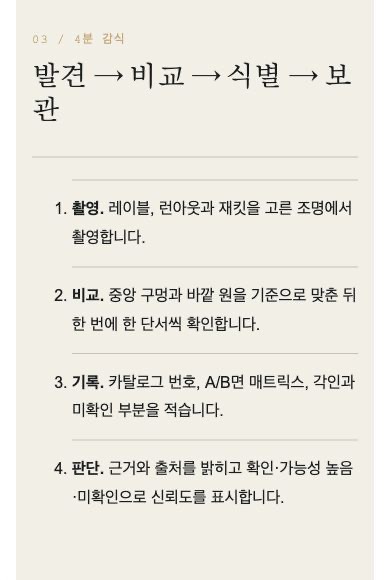
At 390 × 844, the Korean source had no horizontal document overflow and its method steps stacked vertically. We tested its runout, investigation-order and archive links. The final method label wrapped across lines but remained readable. This was a browser viewport check, not a test on every phone or an assessment of camera capture on mobile.
The source is hosted on Blogger and showed advertisements, including an interstitial during the first English navigation. Reading the method did not require us to submit record photographs. We did not audit network traffic, scripts or data retention, so we cannot describe the whole page as offline, tracking-free or entirely local. Embedded blog comments are not a private collection form.
Choose the right next step
Choose this guide when you need a sensible inspection order. Choose an ordinary image viewer when you need manual side-by-side photographs. Choose a notebook or collection database when you need persistent records. For a candidate identification, consult the relevant documented release information and compare the actual evidence rather than expecting this overview to return a catalog result.
These methods complement each other. A viewer helps expose a visual difference; a note preserves the observation; a documented source may support an interpretation. Keeping those roles separate makes it easier to explain both the strength and the limit of your conclusion. None of the three, by itself, makes an unsupported first-press claim reliable.
A related tool for presentation
FrameMint Studio screenshot editor is a relevant next step when you already have images and want a clear presentation copy with visual context or annotations. Keep the untouched record photos and literal inscriptions separately. Presentation editing is not pressing identification or a calibrated measurement of the label.
A useful route is photograph → preserve originals → inspect and transcribe → prepare an annotated comparison copy → share the specific question. We did not run a new physical-record image test in FrameMint for this review; the link connects the presentation task to its published guide.
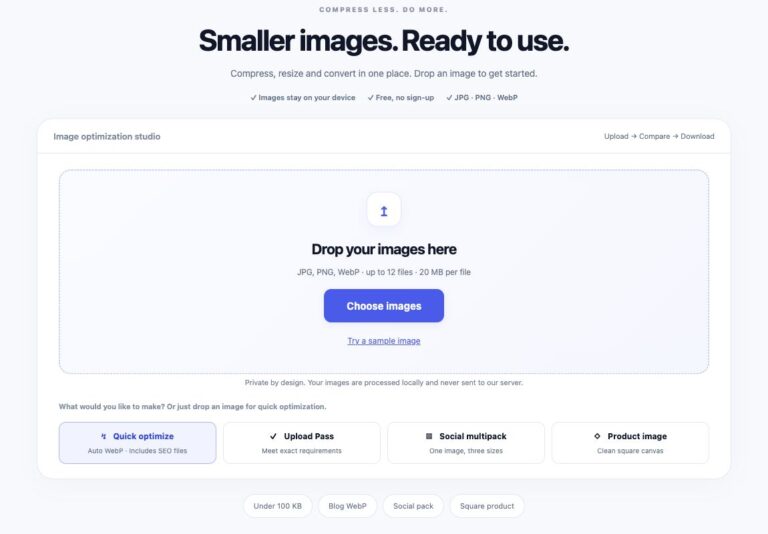
For smaller presentation copies, the published WebP Studio guide explains conversion and resizing choices. If a destination sets exact dimensions or a file-size limit, the PixelFit Studio guide covers preparing an upload copy. Check that small inscription strokes remain legible and preserve the originals; neither workflow identifies a pressing. These are links to existing guides, not additional record-photo tests performed here.
Frequently asked questions
Can I upload two label photos to Label Twin Detector?
No such input was available in the inspected English or Korean article. The card describes a side-by-side comparison method. Use your own viewer for photographs and treat the site as a reading checklist until an operative interface is actually provided.
Will a runout matrix prove that my copy is a first pressing?
Not by itself. Keep the literal inscriptions and compare several relevant clues with documented sources. This review did not identify any physical record or establish a first-press test. An unresolved candidate should remain unresolved in your notes.
Is the four-minute investigation an accuracy guarantee?
No. It is source-page wording for an investigation outline. We tested navigation and visible controls, not identification speed. A partly legible runout or conflicting packaging may require additional photographs and research.
Does the page save my pressing record?
We found no specimen-entry or save interface in the inspected article. Keep your notes elsewhere. The archive cards describe possible types of research material; they did not open an operational private collection database during this review.
Can Korean collectors use the same approach?
Yes, a Korean page is available and its mobile section links worked in our check. For licensed editions, preserve the original label, distributor and sleeve wording before proposing a connection to another edition. The language of a title alone does not settle that relationship.
Start with one side and one observation
Open the guide with a modest goal: photograph one side, transcribe one observation and write down what you cannot yet determine. Then repeat for the other side. Vinyl pressing research benefits from a record another person can check, even when the final identification is still open.
Verification record: source interface and screenshots checked 14 November 2026 (KST). Discogs references above provide external identifier and version guidance; they do not endorse this website. The fictional example and worksheet are our editorial additions.
A RELEVANT NEXT STEP
Tools with a useful connection

FrameMint Studio
Screenshot Editor: 7 Smart FrameMint Studio Checks
Frame screenshots, add manual masks and build captioned stories in FrameMint Studio. Real import, order, recovery and size tests explain what to check before sharing.
WebP Studio
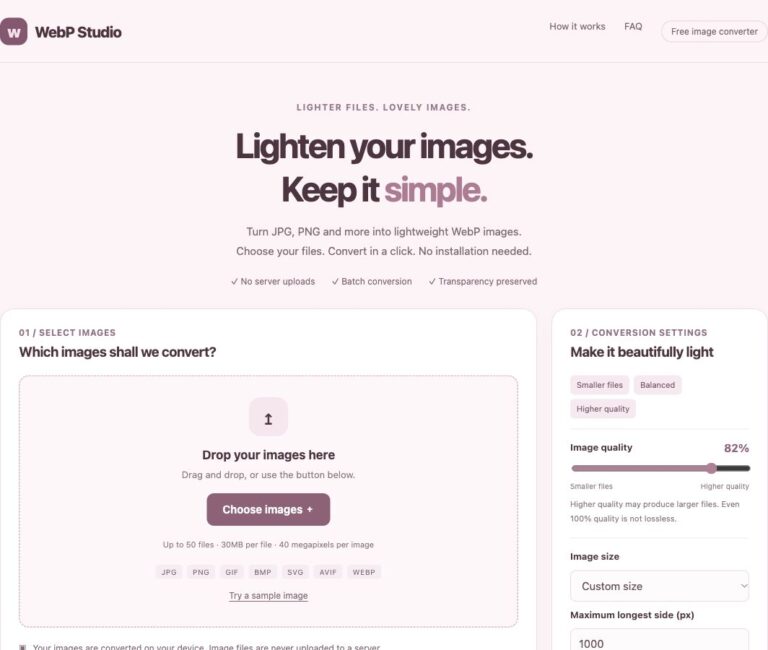
WebP Studio: 7 Essential Checks for Better Batch Images
Use WebP Studio’s English interface to compare image quality, keep dimensions or resize a batch. Actual tests reveal smaller JPGs, larger outputs and a rounded zero-saving total.
PixelFit Studio
Image Upload Optimizer: 7 Essential PixelFit Checks
Prepare exact upload dimensions and file-size conditions with PixelFit Studio. Actual sample and JPEG tests explain PASS/CHECK, crop versus contain, social totals, copied HTML and the limits of unverified file receipt.